_large.webp)
Investing in Senior Housing in Louisiana: Demographics, Market Trends & Opportunity
Louisiana's overall population isn't growing much, but the state is getting older at a steady pace. This creates a reliable and long-lasting need for different types of senior housing, including assisted living, independent living, and memory care. This report brings together publicly available and verifiable information to help healthcare brokers, investors, and capital partners understand the opportunities in this market.
Demographic Momentum: Louisiana Is Aging
Louisiana’s population is steadily aging, a demographic shift with major implications for senior housing. As of the latest ACS release, roughly 780,000 residents aged 65 and older now account for about 17% of the state’s total population.
The table below summarizes the most recent American Community Survey snapshot and directional projections used for planning.
up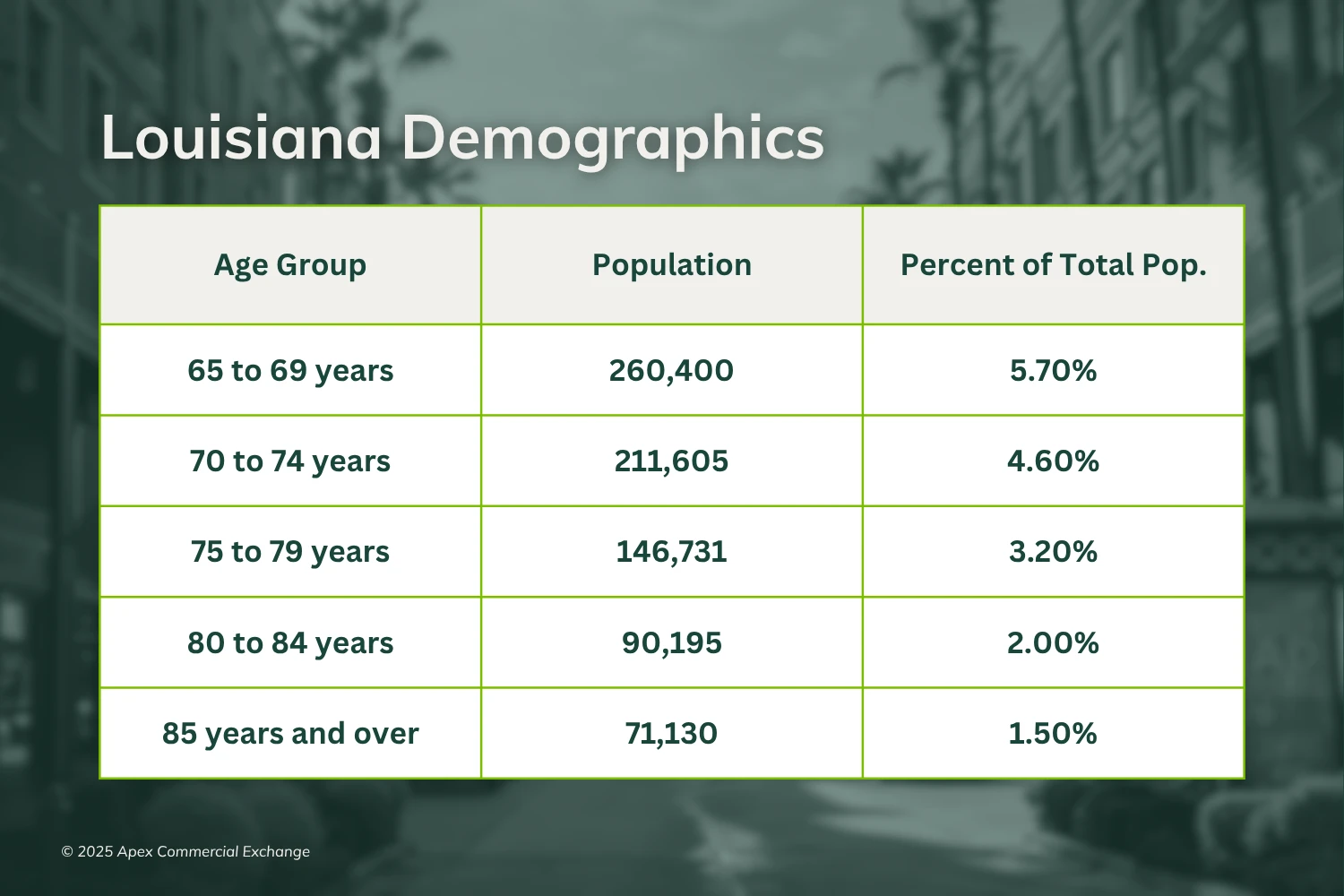
Population***
Memory Care & Alzheimer’s Opportunity in Louisiana
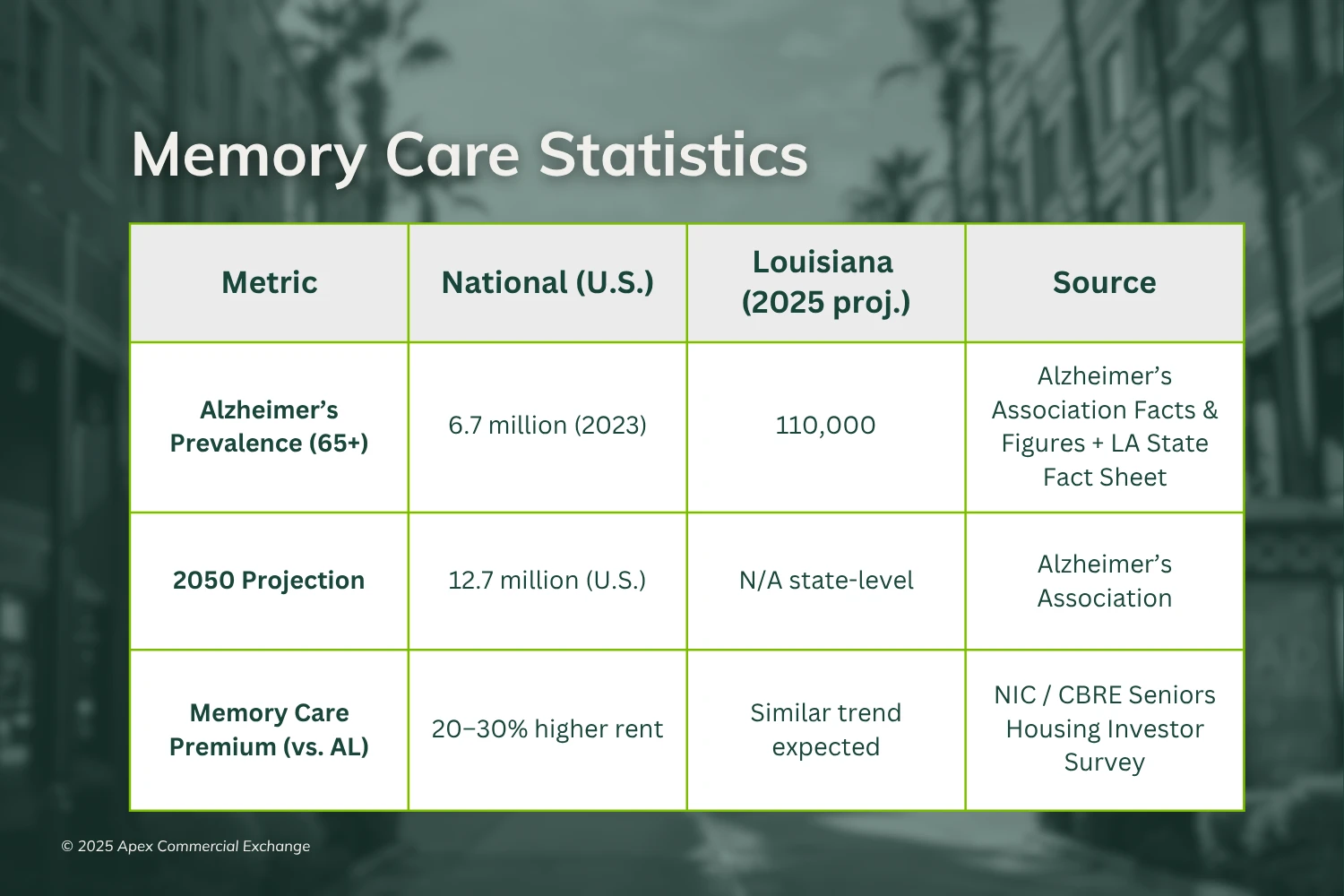
The surge in dementia cases nationwide, and in Louisiana specifically, underscores the need for more memory care communities. Nationally, 6.7 million Americans aged 65+ are living with Alzheimer’s, projected to climb to 12.7 million by 2050 (Alzheimer’s Association 2023). These residents require secure, specialized environments and staff trained in dementia care.
Alzheimer’s Association – 2023 Facts & Figures (PDF)
According to the Alzheimer's Association, there is a growing public health crisis of Alzheimer's disease and other dementias in Louisiana. In 2020, an estimated 95,000 Louisianans aged 65 and older were living with Alzheimer's, a number projected to increase to 110,000 by 2025. This rapid growth, which is cited as the fastest in the Deep South, creates a critical need for more dedicated memory care communities. In addition, about 20.9% of Louisianans aged 45 and older report experiencing subjective cognitive decline, an early warning sign that can precede more serious forms of dementia.
95,000 people aged 65 and older are living with Alzheimer’s in Louisiana.
20.9% of people aged 45 and older have subjective cognitive decline.
Public Health Action in Louisiana | Alzheimer's Association
Investors should note:
Memory care units command 20–30% higher rents than assisted living units, reflecting higher staffing levels, security, and specialized programming.
Partnerships with health systems (hospital affiliations, clinical integration) can further differentiate properties and capture premium pricing.
Secondary markets such as Lafayette and Shreveport may be particularly underserved, offering high-impact entry points.
*** ImageAlzheimer’s Prevalence (65+)
Occupancy Recovery: Fundamentals Strengthen
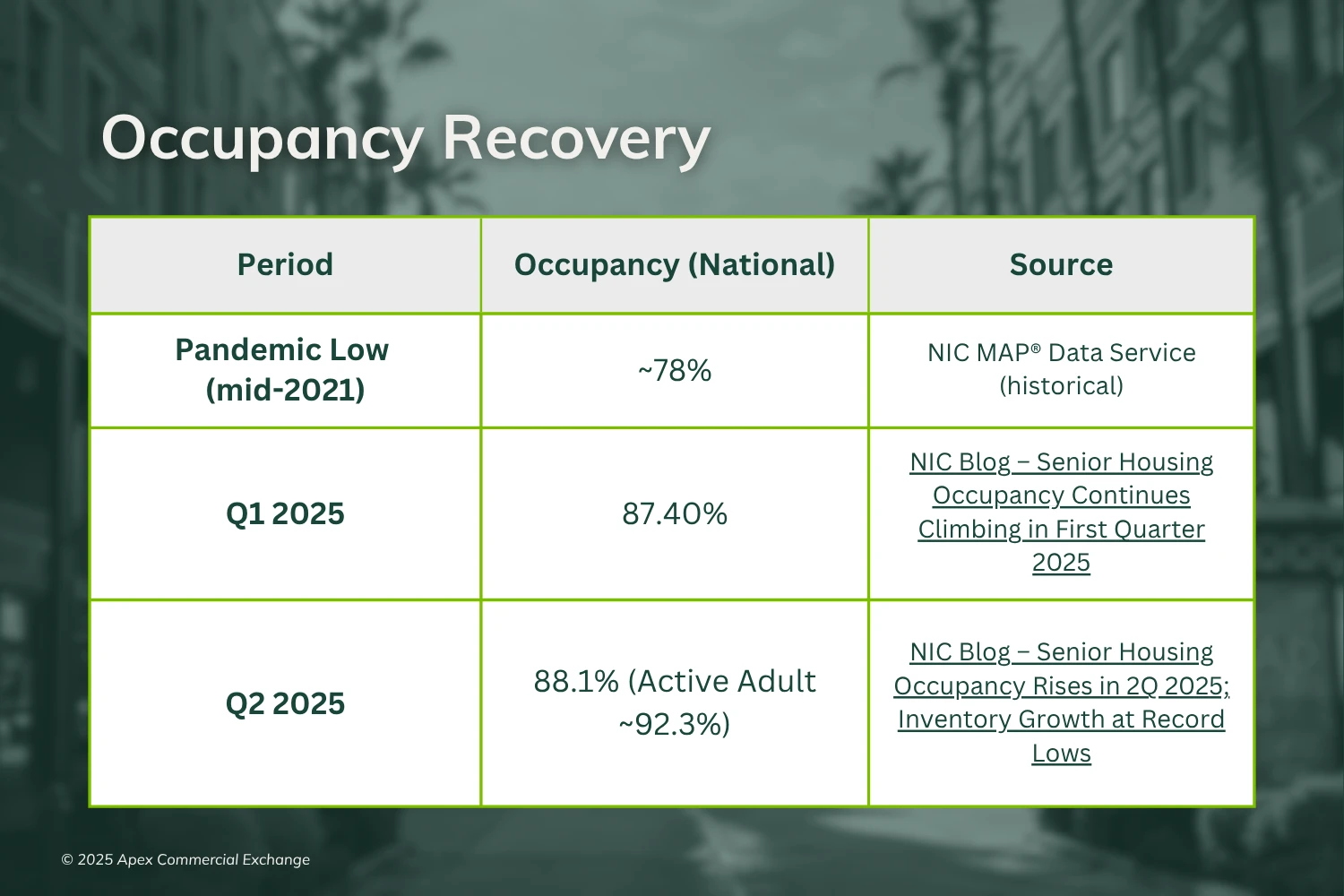
Louisiana markets broadly mirror national senior housing occupancy patterns following the pandemic. National data serve as a proxy where metro‑level public data are limited.
Supply Still Lagging: Development Window
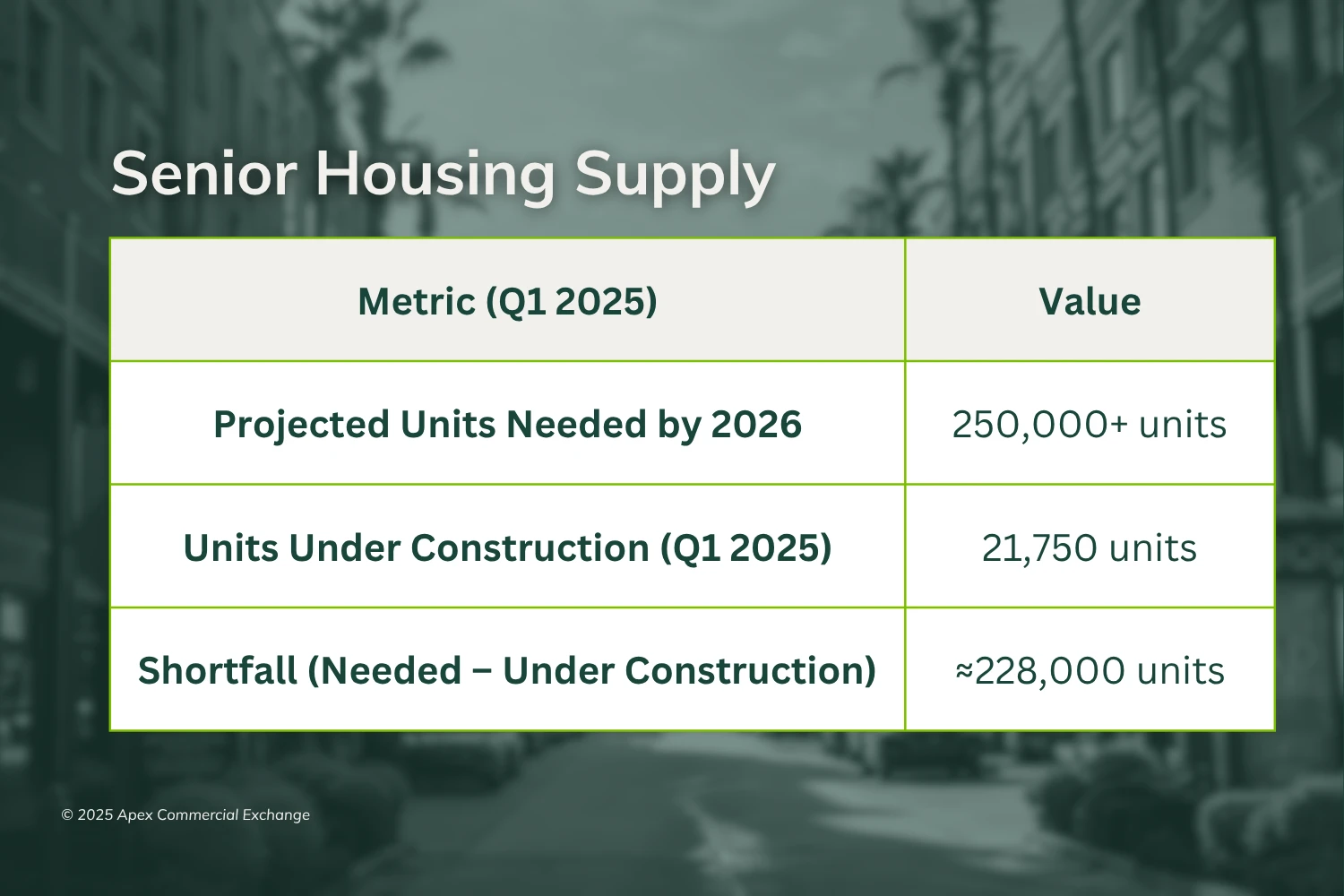
Supply is exceptionally tight, underpinning pricing power. In Louisiana, the supply pipeline is thinner than the national average, mirroring the national trend of record-low inventory growth.
NIC MAP® Vision data indicate that the aging population will require over 250,000 additional units by 2026 to keep pace with demographic needs. Yet as of the first quarter of 2025 only about 21,750 units were actively under construction nationwide, a fraction of what’s necessary. Rising labor and material costs have widened this gap, leading many developers to opt for simpler building programs, fewer luxury amenities, and more cost-efficient finishes to maintain feasibility.
Much of the recent development news in Louisiana has focused on affordable senior housing projects. For example, the Louisiana Housing Corporation (LHC) has been involved in several projects, such as a 70-unit senior housing community in New Orleans and a 117-unit development in Lake Charles. While these projects are vital, they may not meet the demand for market-rate or higher-end memory care and assisted living facilities.
Investment Climate: Yields, Cap Rates & Returns
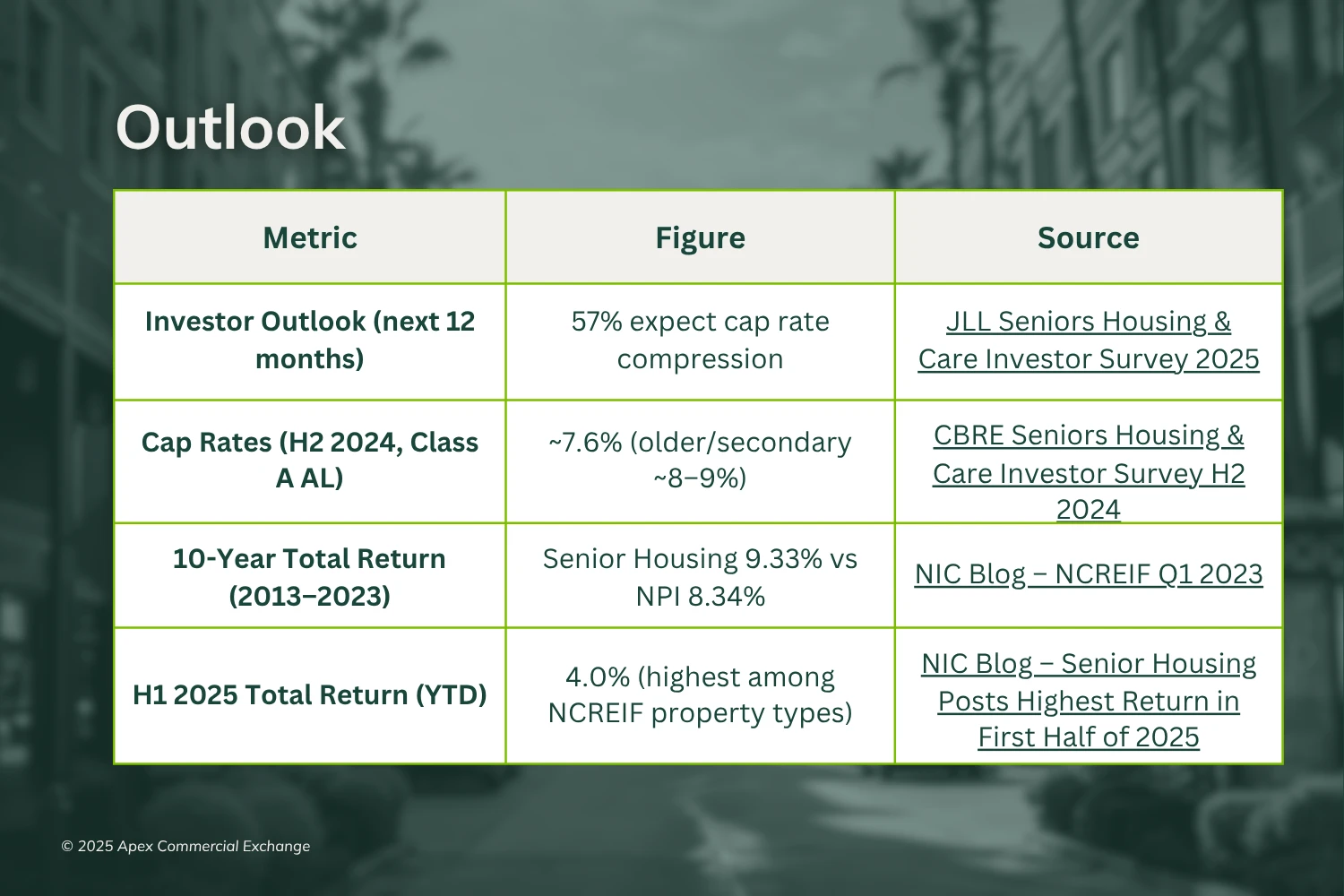
Total returns for senior housing in Louisiana would likely follow the strong national trend, but with their own unique profile. The returns would be driven by strong NOI (Net Operating Income) expansion from rising rents and increasing occupancy, rather than a significant increase in property valuations, which might be a larger factor in core markets. The state's aging demographics and limited new supply create a favorable environment for long-term performance.
The sector offers a yield premium, driven by improving sentiment and strong long-term performance.
Strategic Opportunities in Louisiana
New Orleans & Baton Rouge Corridors: These two metros remain the most dynamic markets in the state. Demand for senior housing is strong while new construction has been limited, leaving a widening gap between the number of seniors and the number of quality facilities available. This imbalance creates room for well-planned developments or acquisitions.
Secondary & Rural Markets: Communities such as Lafayette, Shreveport, and Lake Charles are also experiencing rapid aging. Yet many existing senior housing options in these areas are outdated, undersized, or missing key amenities. Modern, well-designed properties can stand out immediately and capture unmet demand.
Specialized Memory Care: With dementia and Alzheimer’s prevalence on the rise, Louisiana needs more purpose-built memory care settings. Investors and operators who can deliver secure environments, trained staff, and partnerships with local hospitals or health systems will be well-positioned to serve this growing segment.
Looking to act on these trends? 👉 View Louisiana Auctions